Look at the ground before the horizon
Overcast conditions soften contrast and can make color easier to manage. Search for patterns in rocks, plants, paths, and water before composing a wide scene. A close detail can describe a place as clearly as a sweeping view. Watch for bright patches in the frame that pull attention without adding meaning.
Use depth as a structure
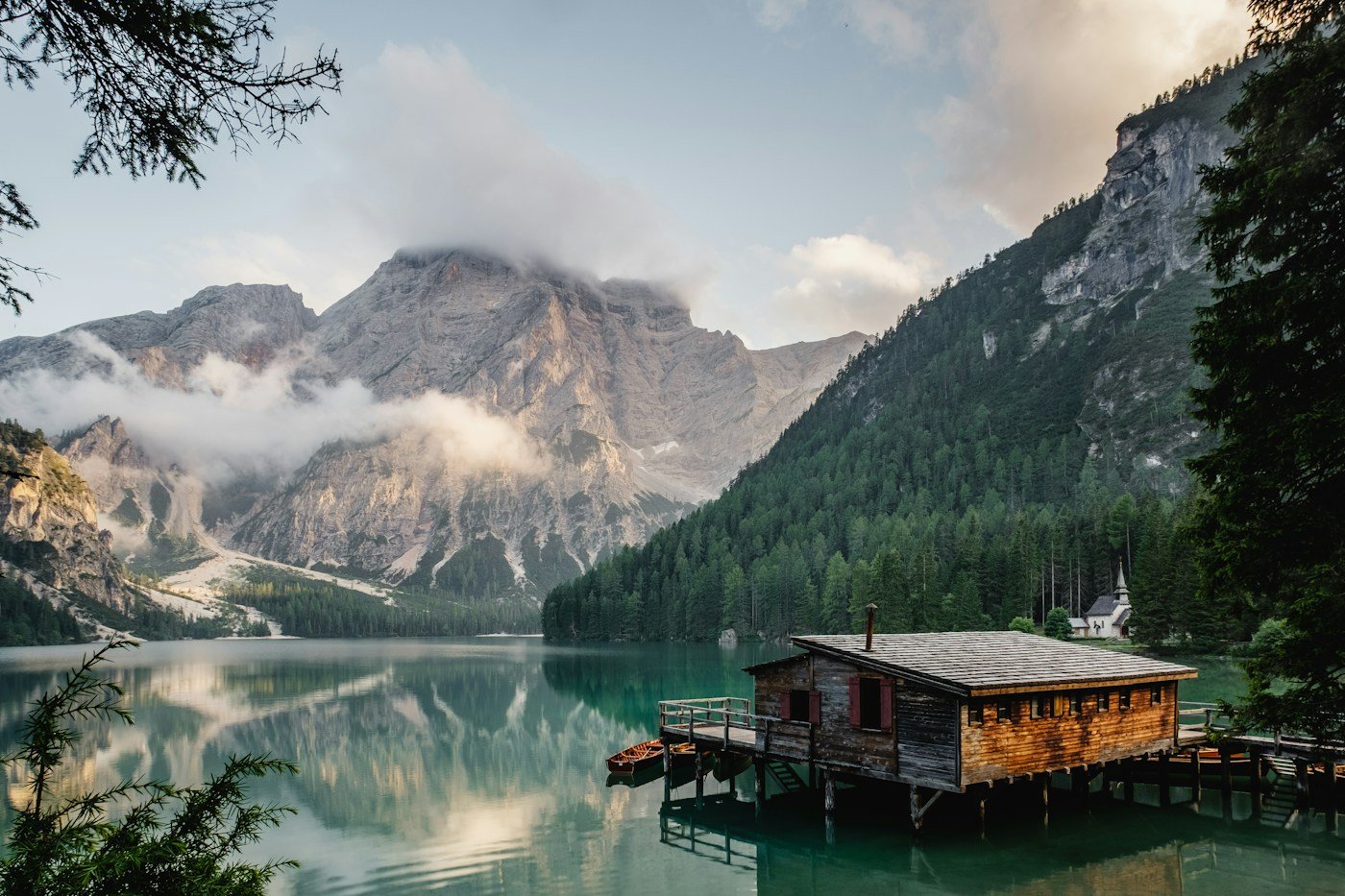
Layer a foreground element, a middle distance, and a background to create a sense of space. Change your position until the layers separate instead of merging into one flat shape. A small aperture may increase depth of field, but focus distance and lens characteristics matter too. Review the image enlarged when sharpness across the frame matters.
Make a monochrome study
Black and white can help you assess luminance, texture, and form when color is not carrying the photograph. Check that tonal differences remain clear and avoid converting simply to make a dull scene feel dramatic. The original color version may still hold important information about weather and season.
Return when the conditions change
An ordinary sky today does not mean the location has little potential. Make a note of the sun direction, access, and foreground options, then come back in different weather. A repeated visit helps you plan without assuming that a particular sunrise or storm will appear on schedule.